

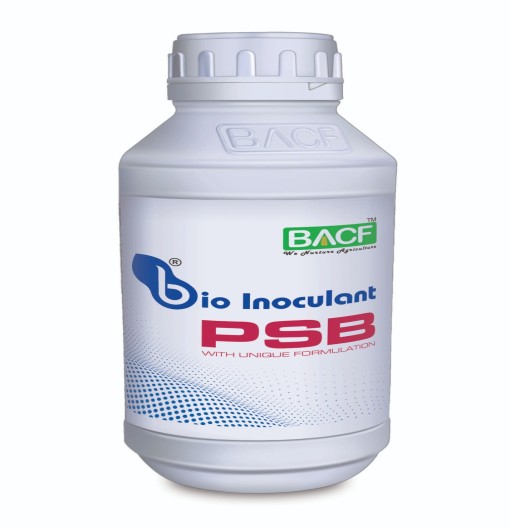
Phosphate Solubilizing Bacteria (PSB)
| Product Type | Fungal repalant |
| Form | Liquid |
| Packaging | Bottle/Can |
| Size | 1 LTR/ 5 LTR |
| Target Crops | All Crops |
| Target Pest | Early Stage |
| Mode Of Action | Soil and Foliar |
PSB are a group of beneficial microorganisms capable of converting insoluble forms of phosphorus (P) into soluble forms, making it available for plant uptake. Phosphorus is a critical nutrient for plant growth, but it is often present in soil in forms that plants cannot directly absorb. PSB play a vital role in enhancing soil fertility and promoting sustainable agriculture by increasing phosphopha
Composition:
Viable Cell Count: CFU 1 X 10⁸ per ml min.
Contamination level: No Contamination at 105 dilutions
pH: 5.0 to 7.5
Common PSB Species:
Bacterial Genera: Pseudomonas, Bacillus, Rhizobium, Enterobacter, Serratia, Azotobacter, and Burkholderia. These bacteria are often found in the rhizosphere (root zone) of plants, where they interact closely with plant roots.
Benefits of PSB:
Applications in Agriculture:
Applications of PSB:
Irrigation:1 litre in one acre
Seed Treatment: Seeds are coated with PSB to promote early root colonization (10 ml per Kg seeds)
Composting: PSB are added to compost to improve phosphorus content.
PSB are used as biofertilizers in crops such as cereals, legumes, vegetables, and fruits.
Factors Affecting PSB Efficiency:
Soil pH, temperature, and moisture levels.
Presence of organic matter and other nutrients.
Compatibility with other soil microorganisms and fertilizers.
Phosphate Solubilizing Bacteria are essential for sustainable agriculture, as they improve phosphorus availability, reduce reliance on chemical fertilizers, and enhance soil health. Their use in biofertilizers is a promising approach to address phosphorus deficiency in soils while promoting environmentally friendly farming practices.

At BACF, we endeavor for peoples across world where each person has high nutritional food security; everyone in farming should have satisfying and bring to fruition life. How we do it, here?s how.
+91 8401490651
info@bacf.in; bacfindia@gmail.com

copyright 2020 BACF. All right reserved.